Ship with
confidence
Zero-Risk Releases,
Every Time
Modern software delivery should feel predictable, not stressful. We build deployment pipelines and infrastructure that eliminate uncertainty and let teams ship at speed without compromising quality. By combining hardened environments, automated validation, and reliable release patterns, we ensure updates flow smoothly from development to production—no surprises, no downtime, no drama.
Immutable Infrastructure
You Can Trust
Your environments should behave the same today as they did yesterday. By using immutable build patterns, every deployment becomes a clean, repeatable event. No configuration drift. No “snowflake servers.” No hidden variables that jeopardize stability. Just consistent, verified builds that make rollouts, rollbacks, and scaling both safer and faster.
CI/CD Pipelines That
Carry the Weight
Automation is the backbone of reliable delivery. Our CI/CD pipelines enforce standards, run advanced test suites, validate security, and deploy with precision—significantly reducing manual errors. With controlled gates, clear audit trails, and automated quality checks, your team gains a release process that supports rapid iteration without compromising compliance or operational safeguards.
Observability Built for
Enterprise Demands
Confidence comes from visibility. We integrate full-stack observability—metrics, logs, traces, and real-time alerts—so teams can detect issues early and act before customers are impacted. Every deployment is monitored, every anomaly is surfaced, and every environment is visible across your organisation. That means fewer outages, faster diagnosis, and continuous operational assurance.
Aligned Teams,
Structured Delivery
With shared frameworks, clear pipelines, and transparent monitoring, your engineering teams collaborate more effectively and deliver with greater consistency. Whether you have multiple deployments per day or a tightly controlled monthly release cadence, the process becomes smoother, safer, and easier to manage across departments and workloads.
Make Risk Visible,
Actionable, and Shared
Why Risk Work Feels Heavy?
Risk assessments often surface every hidden worry in a team — technical unknowns, delivery pressure, expectation mismatches, and the personal fear of being the reason something slips. Engineers end up carrying that emotional and cognitive load because they’re the closest to the work, so they’re the first to see what could go wrong. When those concerns aren’t structured, the weight feels personal rather than operational. This is why documenting risks isn’t just paperwork; it’s a pressure-release valve that turns vague anxiety into visible information the team can act on.
Making Uncertainty Measurable
A risk becomes less intimidating the moment it becomes inspectable. Writing it down forces clarity: what the risk is, where it comes from, and how likely or impactful it would be. This transforms uncertainty from something that haunts decisions into a manageable input to planning. When teams can see risks in the same format — probability, impact, indicators, scenarios — they’re more aligned, less reactive, and far less prone to panic-driven decision making.
Turning Risk Into Design Choices
The value of risk assessment isn’t predicting the future — it’s shaping it. Once risks are documented, the team can decide how to respond: mitigate, monitor, absorb, or redesign. This turns risk work from a fear exercise into a strategic one. Instead of racing toward deadlines and hoping nothing breaks, teams make deliberate trade-offs with full awareness of what they’re accepting and why. This moves engineering from “try not to fail” toward “choose how we succeed.”
Shared Accountability, Not Blame
A good risk assessment spreads responsibility across the team instead of concentrating it on individuals. When risks are visible to everyone, leadership participates in the trade-offs rather than unknowingly pushing unsafe constraints. Engineers stop being “the messenger of bad news” and become collaborators in creating safer delivery paths. This builds trust: risk isn’t a confession—it’s a contribution.
Confidence Comes From Preparedness
Confidence doesn’t come from removing every risk; it comes from knowing none of them will surprise you. A team that understands its exposure, response options, and fallback paths can ship under pressure without fear. Risk assessment is ultimately not about danger—it's about empowerment. It gives engineers and leaders the same mental map of the terrain so they can walk into delivery with calm, mutual certainty instead of crossed fingers.
Talk to Our
DevOps Experts
to streamline your delivery pipeline and deploy with confidence.
Unified Web Systems
for the Enterprise
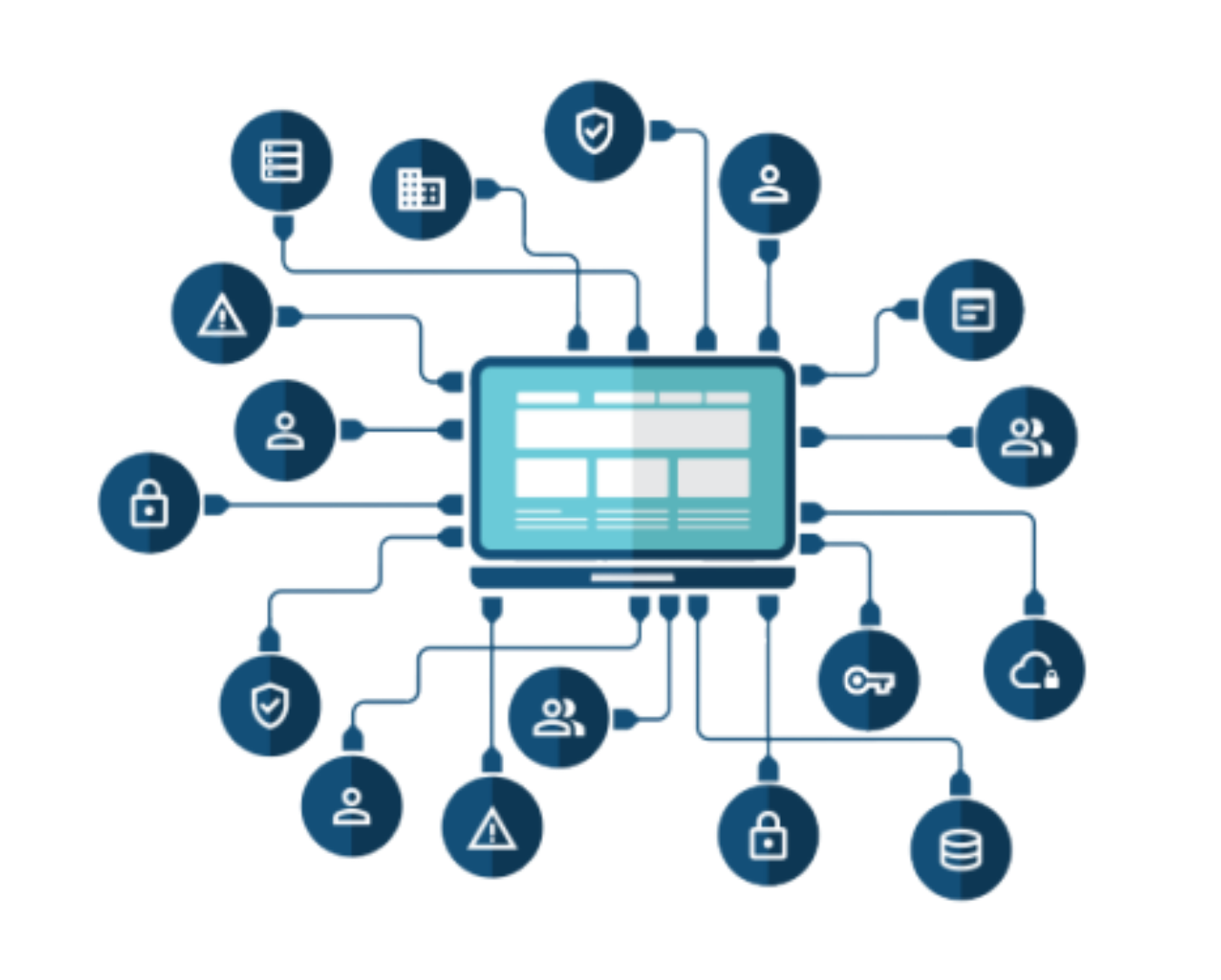
Your web platform should be more than a website—it should be a high-performance engine that supports growth across teams, products, and channels. We design and deliver systems that connect ecommerce, content operations, product data, customer interactions, and enterprise workflows into one coherent digital environment.

Modern Infrastructure,
Proven Stacks
We build on trusted, future-ready platforms including AWS, Google Cloud, Netlify, Vercel, and Railway. Whether you need containerised deployments, serverless functions, global CDN coverage, or automated scaling, our infrastructure approach ensures resilience and efficiency from day one.


Ecommerce, Integrations
and Business Insights
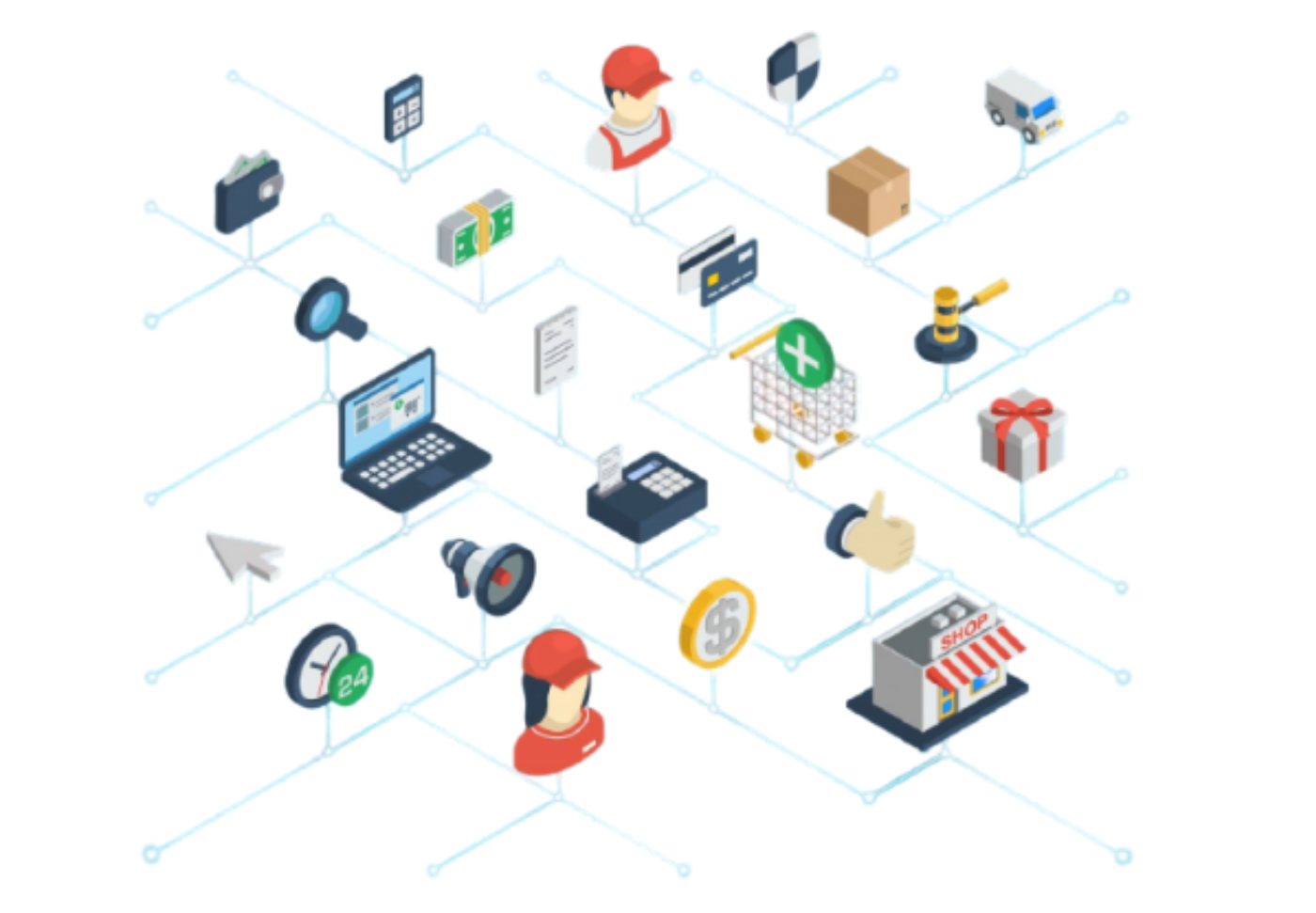
We integrate CRM, ERP, product databases, stock and logistics systems, and marketing automation to unify your business. Real-time dashboards provide visibility across finance, operations, customer service, marketing, and product performance—giving leaders reliable data for faster decisions.

Data for
Every Department
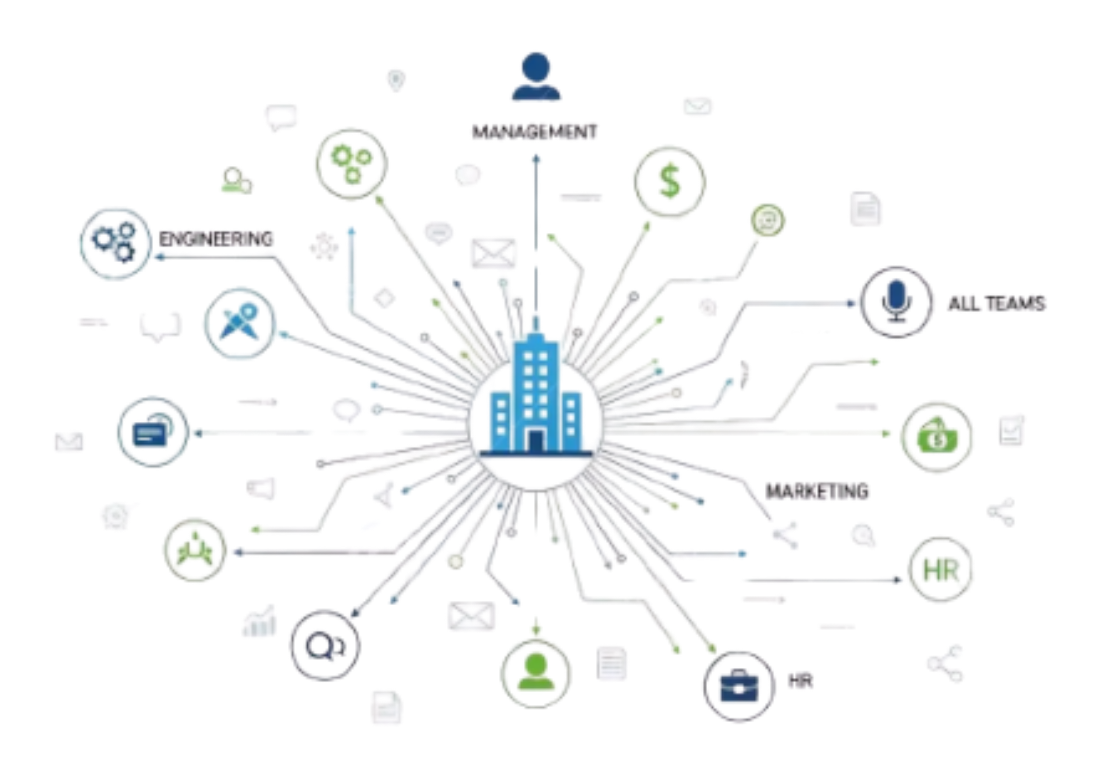
Finance receives accurate, synced reporting. Logistics gets live inventory and fulfilment visibility. Marketing gains attribution clarity. Customer service receives a unified view of the customer. Every department benefits from reduced manual work and better, more reliable information.

Enterprise Websites & Platforms
High-performance sites, portals, and customer-facing services built for speed, stability, and global scale.
Ecommerce & Transaction Systems
Conversion-driven storefronts with secure payments, product data pipelines, stock visibility, and order workflows.
Integrations & Automation
ERP, CRM, finance, logistics, product and marketing systems—automated, synced, and aligned.
Analytics & Dashboards
Custom dashboards tracking sales, customer behaviour, performance metrics, operational health, and marketing attribution.
Multi-Department Support
Solutions tailored for: Finance, Stock & Inventory, Logistics, Products, Marketing, and Customer Service.
Talk to Our
DevOps Experts
to streamline your delivery pipeline and deploy with confidence.
Build Your Design
System the Right Way
Turn Process Into a Competitive Advantage
See how it works
Quick Links
Services
UX Driven Engineering
Experience first development
Risk Assessment
Future-proof foundations
Design Ops
Living Style Guides.
Marketing
Marketing that converts
Solutions
Integrated enterprise systems
Dev Ops
Ship with confidence
Delivery
Built for scale
HomeCompanyCase Studies
About Us
Our Story
Contact Us
Enquire Today
Customer Services
Freshdesk AI Triage
Manufacturer D2C
Global Reach, Multi-Brand
Kanban Chaos
Resource Audit in Jira
©
|
W3B
D3V
NZ
|
All Rights Reserved